48 BC
Alexandria
Gallery 03 · The scroll that survived the fire
Gallery 03 · The ancient world
The scroll that survived the fire
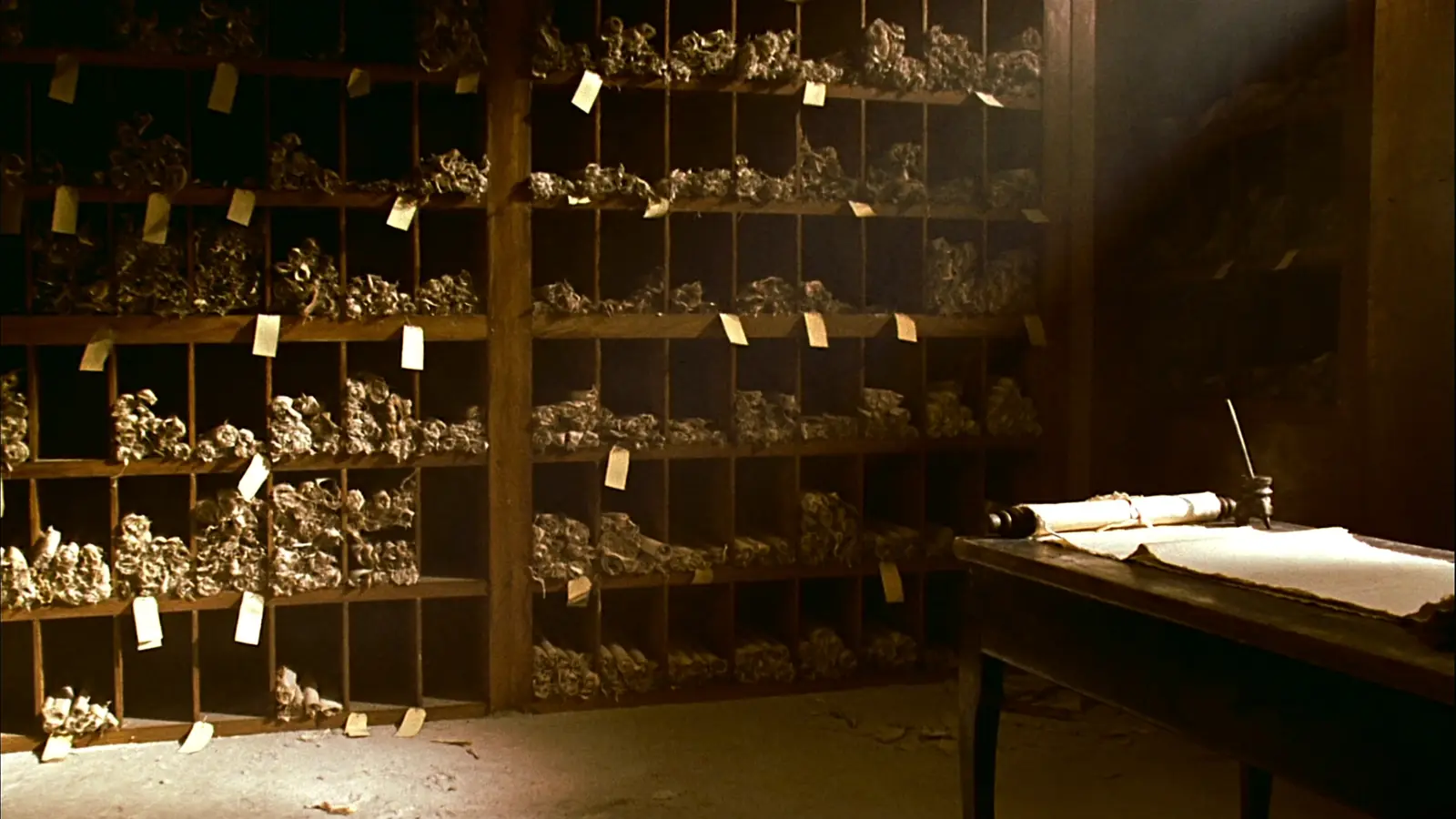
Legend says Caesar's fire destroyed the Library of Alexandria. We follow a representative scroll, one like those the flames spared, and the case that slow neglect did what the fire couldn't.
- Subject
- Ancient world
- Era
- 48 BC – 270s AD
- Place
- Alexandria
- Format
- Reel
- Film
- In production
Gallery 03 · Room 1
The case notes
Case notes
Alexandria, 48 BC. Caesar’s fire sweeps the harbour, and the legend says the library burned with it. The better-supported reading is that the flames reached book warehouses on the docks, while the library itself, which most accounts place in the palace district, was spared.
This story follows a representative survivor, a play by Sophocles on the library’s shelves. It outlives the fire. Then, with Rome in charge and no king paying copyists, nobody recopies it. In damp sea air, papyrus doesn’t last forever. By the time a Roman army wrecks the palace district in the 270s AD, little is left to lose.
What we flag in the script
- The ship story comes from one late source. The tale that the kings seized books from arriving ships and kept the originals is Galen’s, written centuries later. Historians doubt it, so the script says “the story goes”.
- Our Sophocles scroll is a representative object. It combines two ancient anecdotes. No surviving source names this particular roll.
- Neglect as the cause is an argument. It is the view of Bagnall and others, built partly on missing evidence. Some historians give more weight to later destructions.
Gallery 03 · Room 2 · In the case
The poet and the kings
Three portraits, cast in plaster from ancient sculptures and published as 3D scans by the National Gallery of Denmark, and a play of Sophocles that survived on papyrus. Turn them, zoom in, and choose a number to read a detail.
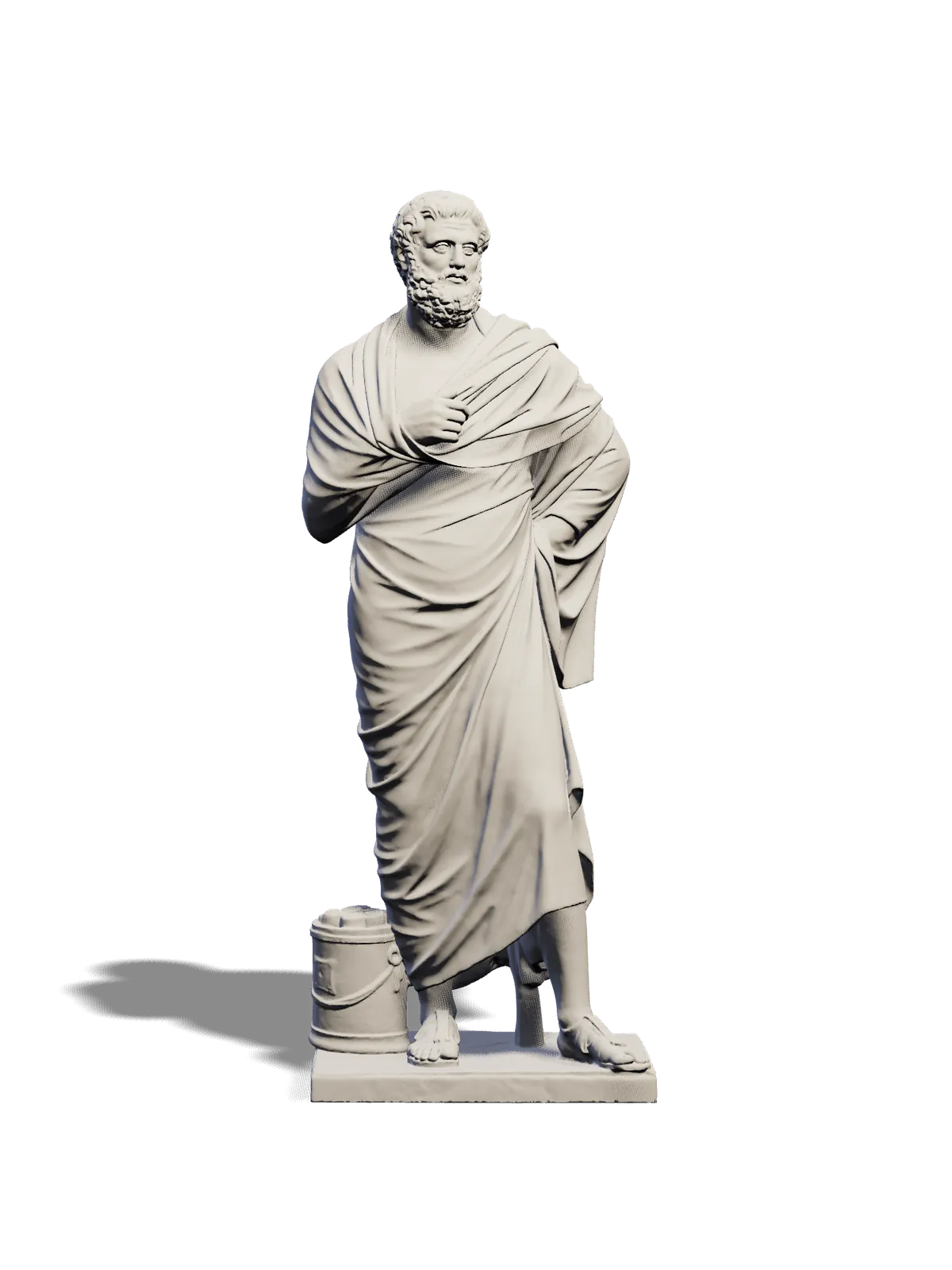
A life-size standing statue of a bearded man wrapped in a heavy cloak, one hand on his hip, white plaster, with a round box at his feet.
Plaster cast, scanned in 3D
Sophocles
- Object
- Portrait statue of the tragedian Sophocles (496 to 406 BC)
- Date
- Cast 1898, from a Roman copy of a Greek original of about 330 BC
- Place
- Original found at Terracina, Italy, before 1839; now in the Vatican Museums
- Material
- Plaster cast of a marble statue, 2.16 m
- Collection
- SMK, National Gallery of Denmark, Royal Cast Collection, KAS633
The playwright whose work our scroll carries, standing wrapped in his cloak. This is a copy of a copy: a plaster cast made in 1898 from a Roman marble, which itself copied a lost Greek statue made about a century after his plays were first staged.
The face
SMK dates Sophocles to 496 to 406 BC. The Greek original was made around 330 BC, about a hundred years after his tragedies were first performed. Source: SMK, National Gallery of Denmark, KAS633.
At his feet
SMK's record names a scrinium at his feet: a case for books or papers. Source: SMK, National Gallery of Denmark, KAS633.
A copy of a copy
Plaster, bought in 1898, cast from a Roman marble found in the theatre at Terracina. That marble copied a lost Greek bronze or marble. Source: SMK, National Gallery of Denmark, KAS633.
3D scan: SMK, National Gallery of Denmark · Public Domain Mark 1.0
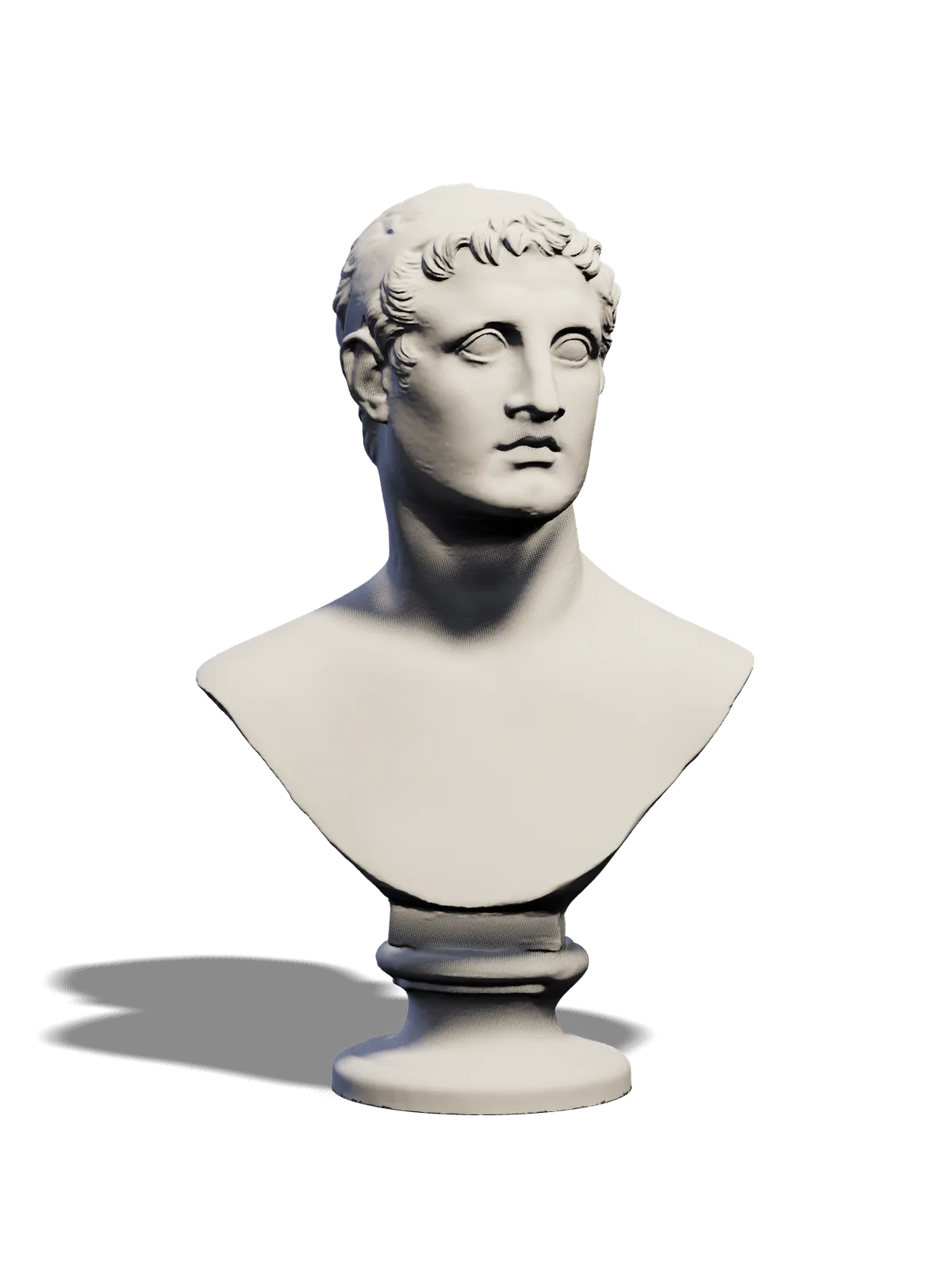
A bust of a young man with short curls and a band around his hair, white plaster, cut off at the chest and set on a round base.
Plaster cast, scanned in 3D
Ptolemy II Philadelphos
- Object
- Portrait bust identified as Ptolemy II Philadelphos, king of Egypt 285 to 246 BC
- Date
- Roman copy of a Hellenistic portrait of the 3rd century BC
- Place
- Original bronze found in the atrium of the Villa of the Papyri, Herculaneum
- Material
- Plaster cast of a bronze, 70 cm
- Collection
- SMK, National Gallery of Denmark, Royal Cast Collection, KAS752
One of the Greek kings of Egypt whose court kept the library. The bronze this was cast from stood in a Roman villa at Herculaneum that had its own library.
The king
SMK identifies the portrait as Ptolemy II Philadelphos, who ruled Egypt from 285 to 246 BC. Source: SMK, National Gallery of Denmark, KAS752.
The other library
The bronze original was found in the Villa of the Papyri, named for its library of more than 1,800 rolls. Vesuvius carbonised them in AD 79, and that is why they survive. Source: Wikipedia, “Villa of the Papyri”.
3D scan: SMK, National Gallery of Denmark · Public Domain Mark 1.0
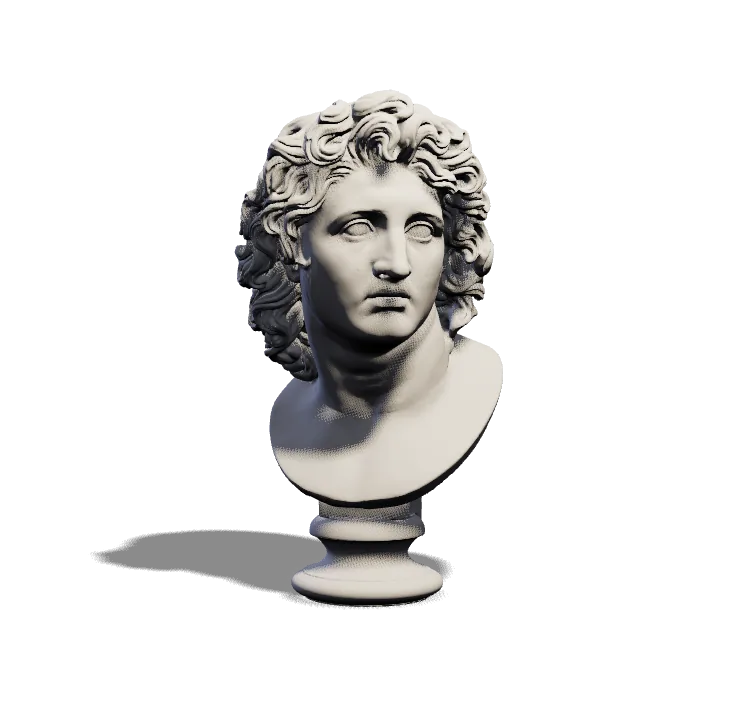
A white plaster bust of a young man with a mass of deep curls, his head turned to one side and tilted upward, a thin band round his hair, on a round foot.
Plaster cast, scanned in 3D
Alexander the Great as Helios
- Object
- Idealised portrait of Alexander the Great as Helios, the sun
- Date
- Cast acquired 1897; the marble it copies is Hellenistic, 3rd to 2nd century BC
- Place
- Marble original in the Capitoline Museums, Rome
- Material
- Plaster cast of a marble bust, 71 cm high
- Collection
- SMK, National Gallery of Denmark, Royal Cast Collection, KAS283
The city in our case carries his name: Alexander founded Alexandria in 332 or 331 BC. Long after his death in 323 BC, sculptors carved him as the sun god.
The band in his hair
SMK notes that rays of the sun were once fixed into the band round his head: this is Alexander as Helios. Source: SMK, National Gallery of Denmark, KAS283.
The city he founded
Alexander the Great founded the city in 332 or 331 BC, as capital of his new Egyptian lands and a naval base. Within a century it was one of the largest cities of the Mediterranean. Source: Britannica, “Alexandria: history”.
3D scan: SMK, National Gallery of Denmark · Public Domain Mark 1.0
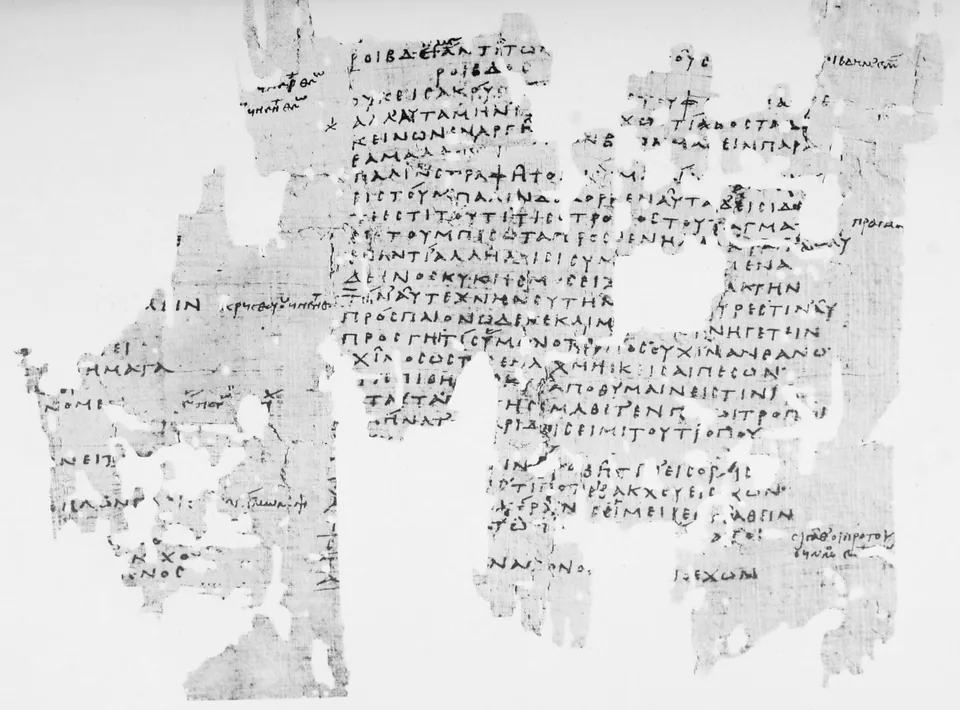
A torn sheet of papyrus with two columns of Greek capitals written by hand, many holes and missing edges, and small notes in the margins.
A Sophocles papyrus that survived
Ichneutae (The Trackers)
- Object
- Papyrus roll, columns iv to v
- Date
- 2nd century AD; photographed 1912
- Place
- Oxyrhynchus, Egypt
- Material
- Papyrus, ink
- Collection
- British Library. Plate from Grenfell and Hunt, The Oxyrhynchus Papyri IX (1912), P.Oxy. IX 1174
A satyr play by Sophocles, known only from three short quotations until this roll was published in 1912. It was found at Oxyrhynchus in Egypt. At Alexandria, on the damp coast, no papyri have survived.
Columns
The text runs in columns along the roll. More than four hundred lines of the play survive in whole or in part. Source: Wikipedia, “Ichneutae”.
What the damp does
Alexandria had a Mediterranean climate, humid enough to harm books. Bagnall notes that no papyri have survived there. Source: Roger S. Bagnall, “Alexandria: Library of Dreams”.

Gallery 03 · Room 3 · Hands on
Keep the roll alive
A papyrus roll wore out. Bagnall puts its life at about a century, sometimes two or three, and the only cure was a fresh copy by hand. Try to keep one roll readable from the kings to the 270s AD.
Readable. Copied in 100 BC.
A model of the argument, not a measurement: here a roll becomes unreadable a century after it was copied, Bagnall's shorter figure. Our Sophocles scroll is a representative object; no source names this roll.
48 BC
Known Caesar's fire sweeps the harbour.
Legend The library burned with it.
Argued The better-supported reading: the flames reached book warehouses on the docks, and the library, which most accounts place in the palace district, was spared. Our roll survives.
30 BC
Known Egypt becomes a Roman province. No king is paying copyists any more.
Argued Bagnall finds no sign that the Roman government gave the library any budget for books.
AD 14 to 37
Argued By the reign of Tiberius, Bagnall argues, relatively little of what the first three Ptolemies collected was still usable.
270s AD
Known A Roman army wrecks the palace district.
Argued By then, the case goes, little was left to lose. Some historians give more weight to later destructions.
Sources: Roger S. Bagnall, “Alexandria: Library of Dreams”; npj Heritage Science (2022), on moisture damage to papyri; Wikipedia, “Roman Egypt”.
Records
Sources used in the fact-check, and for this gallery
- Plutarch, Life of Caesar 49 (LacusCurtius edition)
- Cassius Dio, as quoted in Wikipedia, “Library of Alexandria”
- Galen, on the Ptolemies' book collecting (attalus.org translation)
- Roger S. Bagnall, “Alexandria: Library of Dreams”
- Encyclopaedia Romana, on the library and on Ammianus Marcellinus
- National Geographic, reporting Modrow on the library's slow decline
- World History Encyclopedia, “Library of Alexandria”
- npj Heritage Science (2022), on moisture damage to papyri
- AIC Conservation Wiki, on ink deterioration on papyrus
- Centre for the Study of Manuscript Cultures, Hamburg, on carbon inks
- Wikipedia, “Roman Egypt”
- SMK, National Gallery of Denmark, KAS633
- SMK, National Gallery of Denmark, KAS752
- Wikipedia, “Villa of the Papyri”
- SMK, National Gallery of Denmark, KAS283
- Britannica, “Alexandria: history”
- Wikipedia, “Ichneutae”
Credits
- Sophocles: 3D scan: SMK, National Gallery of Denmark (Public Domain Mark 1.0). Museum record.
- Ptolemy II Philadelphos: 3D scan: SMK, National Gallery of Denmark (Public Domain Mark 1.0). Museum record.
- Alexander the Great as Helios: 3D scan: SMK, National Gallery of Denmark (Public Domain Mark 1.0). Museum record.
- Ichneutae (The Trackers): Photograph: Egypt Exploration Fund, 1912 (Public domain). Museum record.